

If you think it's tough to decide on the make and model of your next laptop, imagine the internal debates to come when we can upgrade eyeballs as casually as RAM.
The Mechanic Eye
Glowing Cuban Tree Frogs Have Invaded Southern Florida

Most Poisonous Animals in the World
It is really hard to tell which animal is the most poisonous in the world. The one that has the most toxic chemicals? The one that kills the biggest amount of people a year? Or maybe the one with the biggest amount of poison?
First of all, I have to admit that the title is a bit incorrect, because there is a difference between poisonous and venomous animals. A poisonous animal carries harmful chemicals called toxins primarily used for self defense. Therefore venomous animals deliver their toxins by stinging, stabbing, or biting. So poisonous animals are passive killers, while venomous animals are active killers.
Nevertheless, theory aside, they are all really dangerous. So look really closely at each photo, cause next time you meet them can be the last thing you ever see.
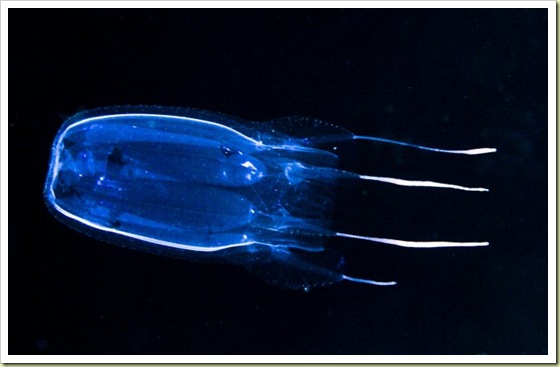
1. Box Jellyfish
(Image credits: jlambusphotography)
The top prize for “The World Most Venomous Animal,” would go to the Box Jellyfish. It has caused at least 5,567 recorded deaths since 1954. Their venom is among the most deadly in the world. It’s toxins attack the heart, nervous system, and skin cells. And the worst part of it is that jelly box venom is so overpoweringly painful, that human victims go in shock, drown or die of heart failure before even reaching shore. Survivors experience pain weeks after the contact with box jellies.
You have virtually no chance to survive the venomous sting, unless treated immediately. After a sting, vinegar should be applied for a minimum of 30 seconds. Vinegar has acetic acid, which disables the box jelly’s nematocysts that have not yet discharged into the bloodstream (though it will not alleviate the pain). Wearing panty hose while swimming is also a good prevention measure since it can prevent jellies from being able to harm your legs.
Jelly box can be found in the waters around Asia and Australia.
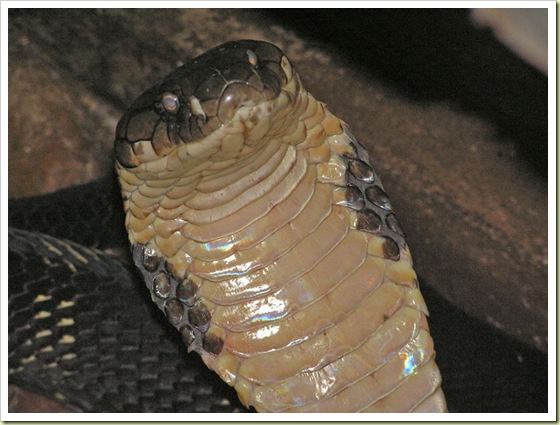
2. King Cobra
(Image credits: Enygmatic-Halycon)
The King Cobra (Ophiophagus hannah) is the world’s longest venomous snake - growing up to 5.6 m (18.5 ft) in length. Ophiophagus, literally means “snake-eater” as it eats other snakes. One single bite of this deadly snake can easily kill a human. This snake is even capable of killing a full-grown Asian Elephant within 3 hours if the larger animal is bitten in a vulnerable area such as the trunk.
It’s venom is not as toxic as other venomous snakes, but King Cobra is capable of injecting 5 times more venom than black mamba and can result in mortality up to 5 times faster than that of the black mamba. It is quite widespread, ranging across South and South-east Asia, living in dense highland forests.
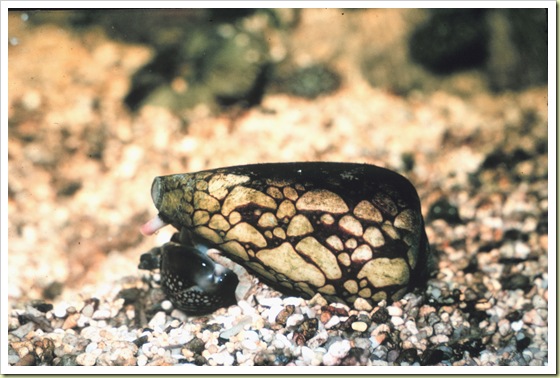
3. Marbled Cone Snail
(Image credits: Wikipedia)
This little beautiful looking Marbled Cone snail can be as deadly as any other animal on this list. One drop of its venom is so powerful that it can kill more than 20 humans. If you ever happen to be in warm salt water environment (where these snails are often found) and see it, don’t even think of picking it up. Of course, the true purpose of its venom is to catch its prey.
Symptoms of a cone snail sting can start immediately or can be delayed in onset for days. It results in intense pain, swelling, numbness and tingling. Severe cases involve muscle paralysis, vision changes and breathing failure. There is no antivenom. However, only about 30 human deaths have been recorded from cone snail envenomation.
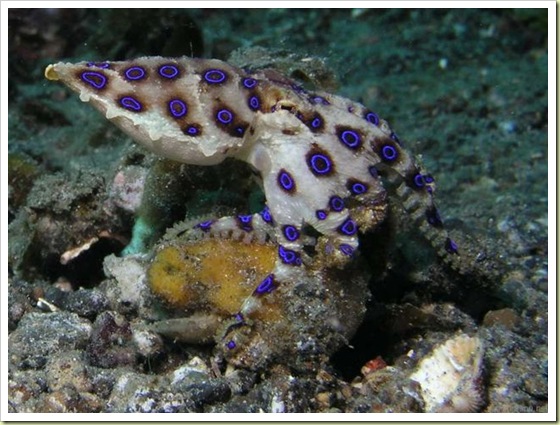
4. Blue-Ringed Octopus
(Image credits: Tom Weilenmann)
The Blue-Ringed Octopus is very small, only the size of a golf ball, but its venom is so powerful that can kill a human. Actually it carries enough poison to kill 26 adult humans within minutes, and there is no antidote. They are currently recognized as one of the world’s most venomous animals.
Its painless bite may seem harmless, but the deadly neurotoxins begin working immediately resulting in muscular weakness, numbness, followed by a cessation and breathing and ultimately death.
They can be found in tide pools in the Pacific Ocean, from Japan to Australia.
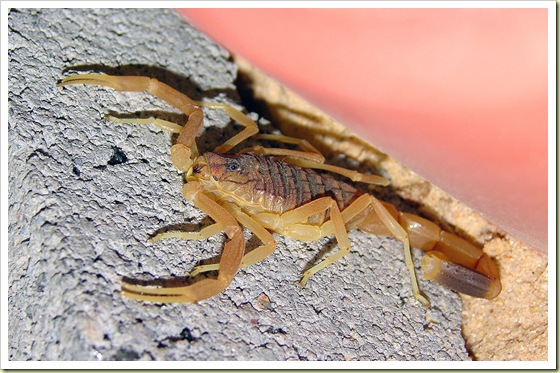
5. Death Stalker Scorpion
(Image credits: furryscaly)
Contrarily to the popular belief most of the scorpions are relatively harmless to humans as stings produce only local effects (pain, numbness or swelling). However, the Death Starker Scorpion is highly dangerous species because its venom is a powerful cocktail of neurotoxins which causes an intense and unbearable pain, then fever, followed by coma, convulsions, paralysis and death. Fortunately, while a sting from this scorpion is extremely painful, it would be unlikely to kill a healthy, adult human. Young children, the old, or infirm (with a heart condition) are at the biggest risk.
Death stalker scorpions are spread in North Africa and Middle East.
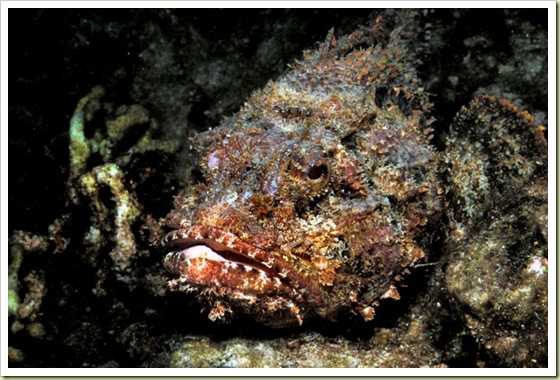
6. Stonefish
(Image credits: laszlo-photo)
Maybe Stonefish would never win a beauty contest, but it would definitely win the top prize for being “The World Most Venomous Fish”. Its venom causes such a severe pain that the victims of its sting want the affected limb to be amputated. It is described as the worst pain known to man. It is accompanied with possible shock, paralysis, and tissue death. If not given medical attention within a couple of hours It can be fatal to humans.
Stonefish stores its toxins in gruesome-looking spines that are designed to hurt would-be predators.
Stonefish mostly live above the tropic of Capricorn, often found in the shallow tropical marine waters of the Pacific and Indian oceans, ranging from the Red Sea to the Queensland Great Barrier Reef.
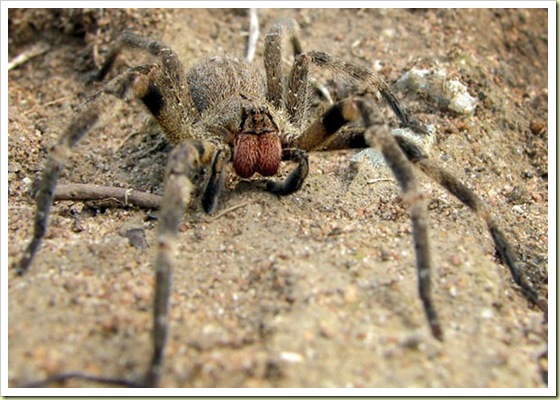
7. The Brazilian wandering spider
(Image credits: Wikipedia)
The Brazilian Wandering Spider (Phoneutria) or banana spider appears in the Guinness Book of World Records 2007 for the most venomous spider and is the spider responsible for most human deaths.
This spider is believed to have the most potent neurotoxic venom of any living spider. Only 0.006mg (0.00000021oz) is sufficient to kill a mouse. They are also so dangerous because of their wandering nature. They often hide during daytime in highly populated areas inside houses, clothes, boots, and cars.
Its venomous bite causes not only intense pain, the venom of the spider can also cause priapism - uncomfortable erections lasting for many hours that lead to impotence.
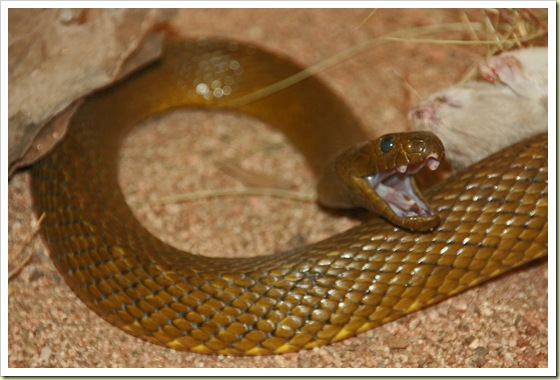
8. Inland Taipan
(Image credits: kleinmatt66)
The prize for “The World’s Most Venomous Snake” goes to the Inland Taipan of Australia. Just a single bite from this snake contains enough venom to kill 100 human adults or an army of 250,000 mice. Its venom is at least 200 - 400 times more toxic than a common cobra. The Inland Taiwan’s extremely neurotoxic venom can kill an adult human in as little as 45 minutes. Fortunately this snake is very shy and there have been no documented human fatalities (all known bites were treated with antivenin).
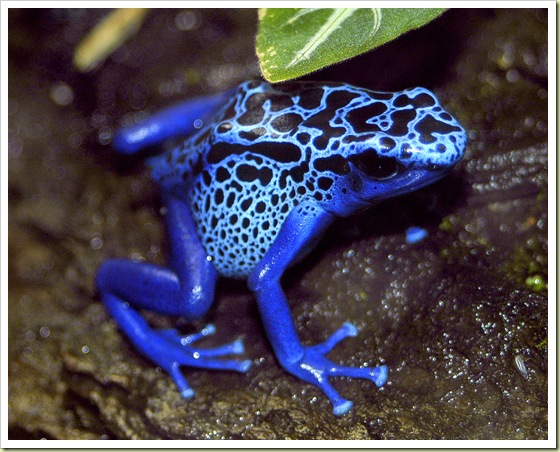
9. Poison Dart Frog
(Image credits: ucumari)
If you ever happen to be running through the rain forests somewhere in Central or South America, do not ever pick up beautiful and colorful frogs - it can be the Poison Dart Frog. This frog is probably the most poisonous animal on earth.The 2 inch long (5cm) golden poison dart frog has enough venom to kill 10 adult humans or 20,000 mice. Only 2 micrograms of this lethal toxin (the amount that fits on the head of a pin) is capable of killing a human or other large mammal. They are called “dart frogs” because indigenous Amerindians’ use of their toxic secretions to poison the tips of their blow-darts. Poison dart frogs keep their poison in their skins and will sicken or kill anybody who touches or eats it.
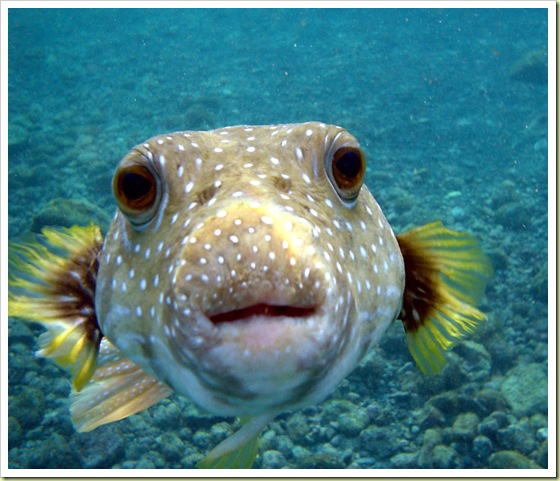
10. Puffer Fish
(Image credits: Wikipedia)
Puffer Fish are the second most poisonous vertebrate on earth (the first one is golden dart Frog). The meat of some species is a delicacy in both Japan (as fugu) and Korea (as bok-uh) but the problem is that the skin and certain organs of many puffer fish are very poisonous to humans.
This puffy fish produce rapid and violent death..Puffer’s poisoning causes deadening of the tongue and lips, dizziness, vomiting, rapid heart rate, difficulty breathing, and muscle paralysis. Victims die from suffocation as diaphragm muscles are paralyzed. Most of the victims die after four to 24 hours. There is no known antidote, Most deaths from fugu happen when untrained people catch and prepare the fish.
Statistics show that there were 20 to 44 incidents of fugu poisoning per year between 1996 and 2006 in all of Japan and up to six incidents per year led to death. Since Fugu’s poison can cause near instantaneous death, only licensed chefs are allowed to prepare it.
Robot scientist makes discoveries with no human help

A robot scientist that can generate its own hypotheses and run experiments to test them has made its first real scientific discoveries.
Dubbed Adam, the robot is the handiwork of researchers at Aberystwyth University and the University of Cambridge in the UK. All by itself it discovered new functions for a number of genes in Saccharomyces cerevisiae, aka brewer's yeast.
Ross King, a computational biologist at Aberystwyth, who leads the project, said that Adam's results were modest, but real. "It's certainly a contribution to knowledge. It would be publishable," he says.
Adam, which actually consists of a small roomful of lab equipment, has four personal computers that act as a brain, and possesses robot arms, cameras, liquid handlers, incubators and other equipment. The team gave the robot a freezer containing a library of thousands of mutant strains of yeast with individual genes deleted. It was also equipped with a database containing information about yeast genes, enzymes, and metabolism, and a supply of hundreds of metabolites.
To discover which genes coded for which enzymes, Adam cultured a mutant yeast with a certain gene knocked out, and monitored how well the mutant grew without a particular metabolite. If the strain grew poorly without the metabolite, Adam learned something about the function of the knocked out gene. The robot could carry out more than 1000 of these experiments a day.
In all, Adam formulated and tested 20 hypotheses about genes coding for 13 enzymes. Twelve hypotheses were confirmed. For instance, Adam correctly hypothesised that three genes it identified encode an enzyme important in producing the amino acid lysine. The researchers confirmed Adam's work with their own experiments.
The team is now working on a new robot, called Eve, which will search for new drugs.
Adam, Eve and their ilk could soon automate routine and time-consuming scientific chores, leaving human scientists free to make higher level, creative leaps, says King. But ultimately the robots may even be capable of conducting truly independent research, he says.
Will Bridewell, an artificial intelligence researcher at Stanford University in Palo Alto, California, says Adam is operating only at the level of a graduate student. Still, the robot is moving closer to the goal of an artificially intelligent machine that can cooperate with other scientists and write up their results in natural language, he says. "That's probably far off, but it seems likely that we will get there. This is yet another step on the way."
In a further step in this direction, researchers at Cornell University in Ithaca, New York, have developed software that can observe physical systems and independently identify the laws that underlay them.
The software, which was not pre-programmed with any basic rules of physics or geometry, was shown images of moving systems such as a double pendulum. It then used an evolutionary algorithm to generate mathematical equations, and tested them to see if they accurately described the system it had observed. For instance, the computer produced an equation that described conservation of angular momentum.
AMD, Nvidia Release 'Most Powerful' Graphics

On Thursday, both AMD and Nvidia released updates to their graphics cards, with AMD claiming to have the most powerful graphics chip in the world. According to testing from ExtremeTech, however, Nvidia's card is faster.
AMD released the Radeon HD 4890 reference card, which the company says will be priced at $249 by its fourteen or so partners, or $229 after a rebate. Nvidia countered with the GeForce GTX 275, which will be sold at about the same $250 street price.
Technically, both cards are extensions of existing architectures, although ATI is using a different ASIC for the 4890, simply rearranging the components to allow the chips to reach higher clock speeds.
Although both cards are powerhouses in and of themselves, the $250 price point is becoming more significant in a world where a new graphics card costs as much as a dedicated game console, PC gaming's chief competition. Both AMD and Nvidia have shifted away from monolithic graphics monstrosities into a business model that attempts to facilitate older integrated graphics to work together with a newer graphics card, and push PC gamers into buying one graphics card now, buying another later, and pairing them together to gain more performance.
"The ATI Radeon HD 4890 graphics card represents the AMD sweet spot strategy reloaded," said Rick Bergman, senior vice president and general manager, Graphics Products Group, AMD, in a statement. "With last year's launch of the ATI Radeon HD 4850 and ATI Radeon HD 4870 products, we gave gamers great performance and an incredible value proposition. Today, we're doing it again. ATI Radeon HD 4890 graphics cards are incredible performers, priced to sell in all major markets worldwide."
Although AMD has publicly boasted of its transition to 40-nm process technologies and aggressively using new memory technologies, at Nvidia "we want to focus on things, more about what does the end user consumer care about?" said Ujesh Desai, the general manager of the GeForce product group at Nvidia, in a small press conference last week. The company will shift to the more aggressive technologies "when it makes sense," he said.
So who won the graphics shootout? According to an ExtremeTech review of the AMD Radeon HD 4890 and the Nvidia GeForce GTX 275, most likely Nvidia, by a nose. But the review also did not take into account what AMD claims is an extensive overclocking threshold, which OEMs and enthusiasts will take advantage of.
Below, ExtremeTech summarizes the new architectures:
| GeForce GTX 260 c216 | GeForce GTX 275 | Radeon HD 4870 | Radeon HD 4890 | |
| Price | ~$200 | ~$250 | ~$250 | ~$250 |
| GPU | GT 200b | GT 200b | RV770 | RV790 |
| Manufacturing Process | 65/55nm | 55nm | 55nm | 55nm |
| Transistor Count | 1.4 B | 1.4 B | 956 M | 959 M |
| Core Clock | 576 MHz | 633 MHz | 750 MHz | 850 MHz |
| Stream Processor Clock | 1.24 GHz | 1.404 GHz | 750 MHz | 850 MHz |
| Memory Clock | 2.0 GHz DDR | 2.26 GHz DDR | 1.8 GHz DDR | 1.9 GHz DDR |
| Stream Processors | 216 | 240 | 800 | 800 |
| Texture Units | 72 | 80 | 40 | 40 |
| Render back end (ROPs) | 28 | 28 | 16 | 16 |
| Frame Buffer | 896 MB | 896 MB | 1024 MB | 1024 MB |
| Memory Interface | 448 bits | 448 bits | 256 bits | 256 bits |
| Memory Bandwidth | 111.9 GB/sec | 127 GB/sec | 115.2 GB/sec | 124.8 GB/sec |
Samsung Impression Has Great Dumphone Hardware, Less Perfect Software

For an entry level dumbphone, this Samsung Impression is a really nice piece of hardware. And while the the Software UI more or less gets the job done, it's still a little bumpy.
The phone makes use of a 3.2-inch, capacitive-touch AMOLED screen that's plenty bright and responsive...at times (more on that later). The sliding action is nice and springy, and the keyboard is both spacious and clicky, mostly because it's a little bigger than most phones in its category.However, the native resolution doesn't really do the screen justice, with visuals looking a little pedestrian. The 3 megapixel camera was also a bit underwhelming, but far from terrible.
On the software side, I was a little less impressed, especially with touch accuracy. The moments where the UI was particularly responsive means that the screen hardware itself is ok, but the that the OS is a little wonky. Being a capacitive screen, you shouldn't have to press very hard for the hardware to register your finger. Some times the Impression required a decent amount of contact to really get into action. Other than that, the UI is standard AT&T fare once you get past the TouchWiz UI, but at this point it's starting to look and feel bit dated.
Scientists Build Ultrathin Speakers That Look Suspiciously Like Tin Foil

Both BBC News and the science publication PhysOrg had takes on this, and the company itself has a website that appears to be legit, or at least not funny enough to be a joke. Still, the only "product" we see in multiple images is an unmistakable sheet of tin foil. OK, supposing I bite, here's the scientific description, from PhysOrg:

FFL technology is a carefully designed assembly of thin, conducting and insulating, materials resulting in the development of a flexible laminate, which when excited by an electrical signal will vibrate and produce sound.The speaker laminate operates as a perfect piston resonator. The entire diaphragm therefore radiates in phase, forming an area source. The wave front emitted by the vibrating surface is phase coherent, producing a plane wave with very high directivity and very accurate sound imaging.
To me, this means that it vibrates like a traditional speaker, but only in the tighter wavelengths. (It does not behave like some new speaker technologies do, by producing electrical charges that excite nearby air molecules, thereby making sound without vibrating.)
So how can this thing create deep bass? Admittedly, the company site only promotes the technology for use in cars and conference rooms, presumably as some kind of teleconferencing system.
It's really really hard not to just call BS on this, especially with those hilariously serious pictures. Anyhow, stay tuned, because if they ever release something that looks like actual hardware, I'll be sure to write more about it.
Subscribe to:
Posts (Atom)


